The auto market didn’t get harder
It got structurally different
The rules that governed approvals, lending, and buyer behavior for decades no longer apply. Dealerships that don’t adapt their post-decline strategy will quietly lose market share in the years ahead.
CREDIT CONTRACTION IS NO LONGER THEORETICAL
For years, auto retail benefited from abundant and flexible credit. That environment has shifted:
Tighter underwriting standards
Reduced subprime and near-prime approvals.
Lenders exiting the market or dramatically scaling back
Increased scrutiny on risk exposure
The result is not fewer buyers it’s more temporarily unfinanceable buyers.
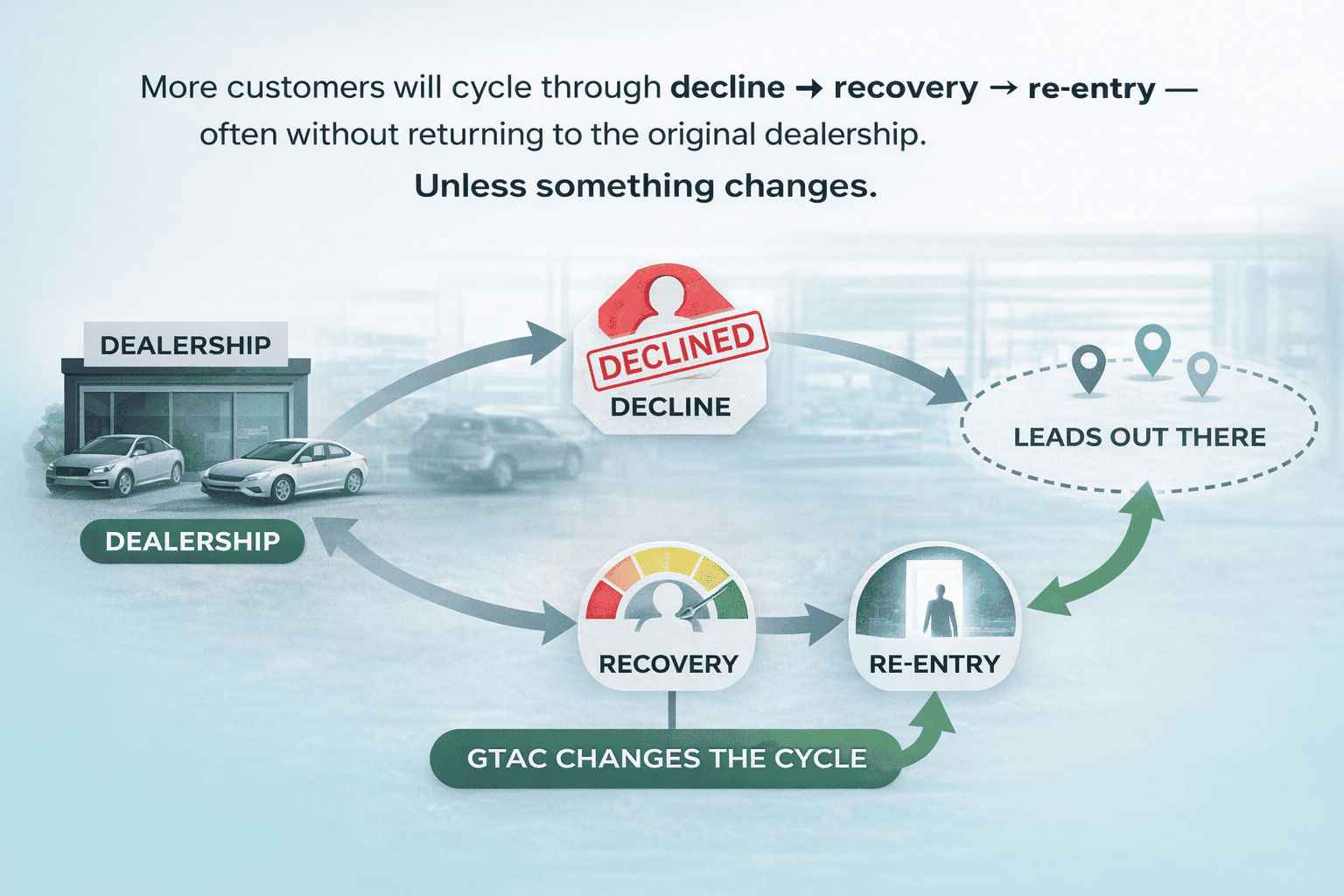
Customers aren’t gone. They’re delayed.
WHEN LENDERS STRUGGLE, DEALERSHIPS ABSORB THE IMPACT
As lending institutions restructure, consolidate, or fail, the effects are felt first on the showroom floor.
Dealerships are seeing:
Sudden guideline changes
Inconsistent approval
Reduced flexibility for borderline applicants
Higher fallout rates after submission
Declines are no longer edges cases.
They are becoming a structural feature of the market.
Risk is being pushed backward — onto dealerships
Rising auto loan delinquencies and repossessions are forcing lenders to protect themselves.
That protection shows up as:
Narrower approval windows
Higher scrutiny on credit profiles
More conditional approvals
Faster decline decisions
This doesn’t eliminate demand.
It compresses timing.
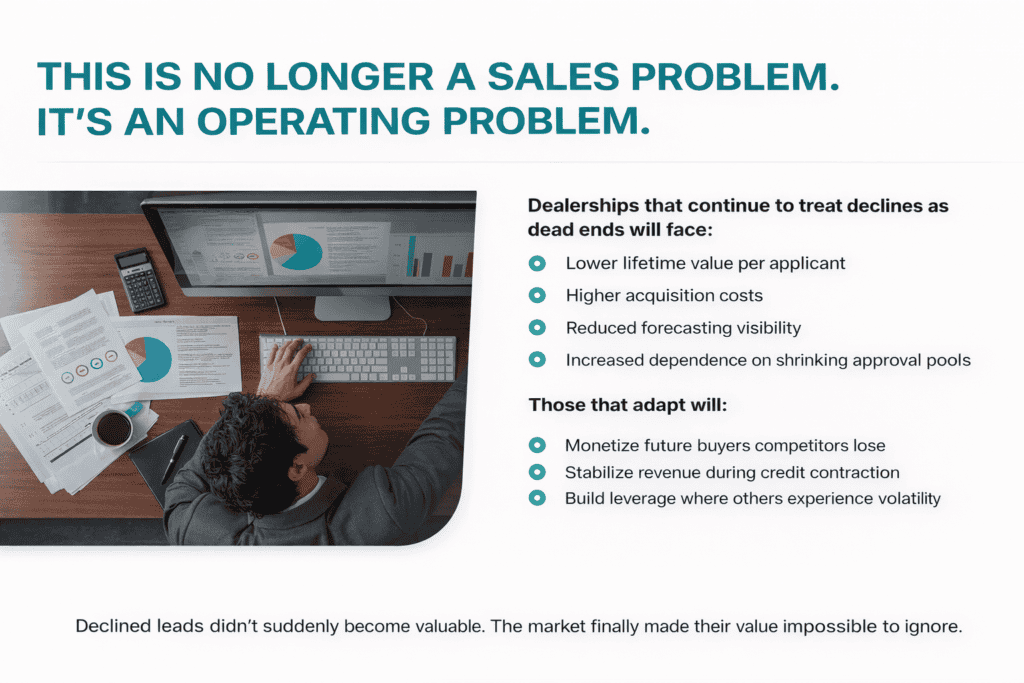
Declines now outpace dealer follow-up capability
Sales teams are built to close deals, not to manage delayed buyers over months or years.
CRMs weren’t designed to:
Educate declined applicants
Monitor readiness over time
Re-engage buyers when conditions improve
Capture downstream value
So declined leads fall into a blind spot.
Not because dealerships don’t care
but because the system was never built for this environment.